
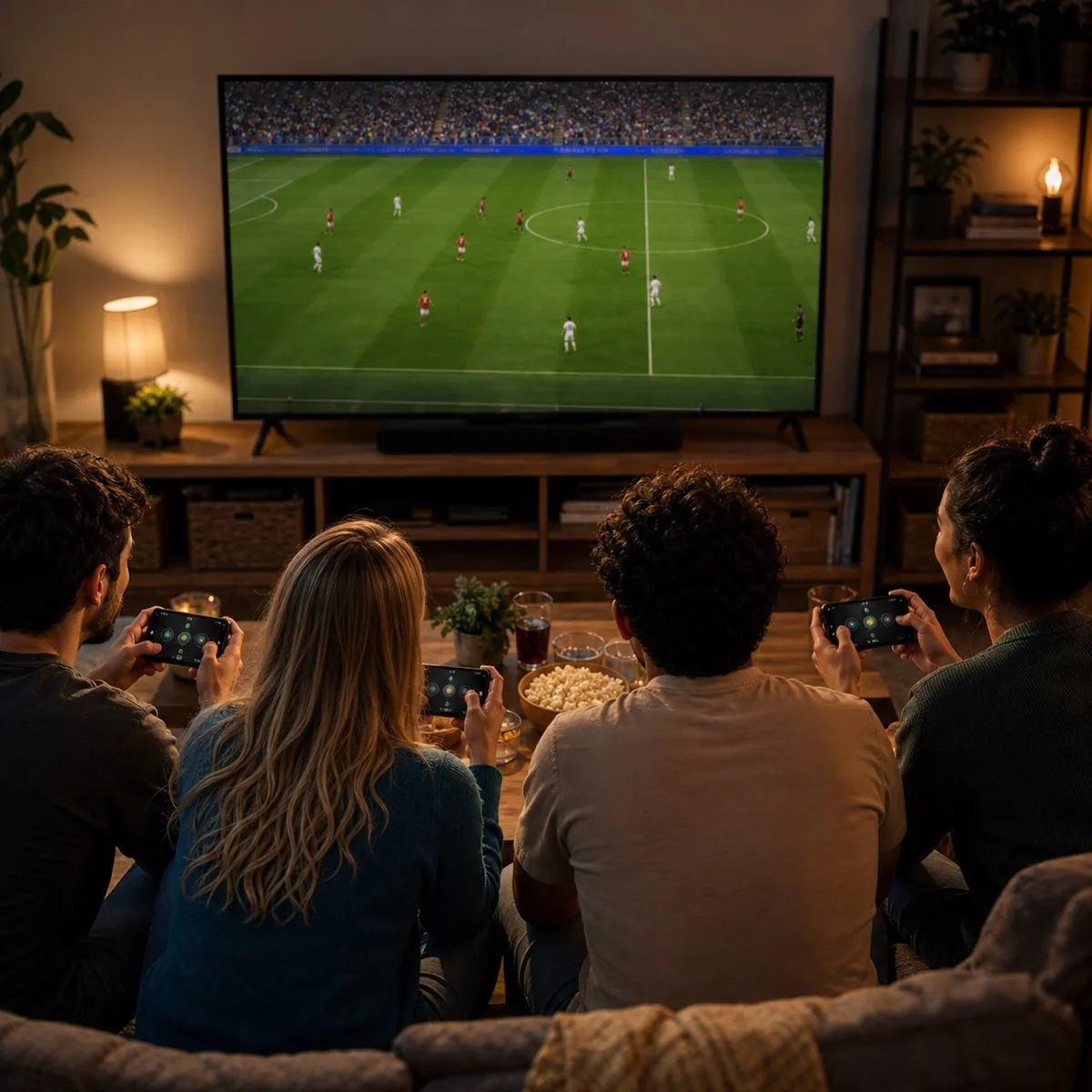
Netflix does not need to beat PlayStation. It only needs to take over the couch
A phone as the controller, a television as the console, and almost no barrier to entry. Netflix may create games for people who would never buy a console.
Did you know that you can play games on Netflix?
For a long time, I treated Netflix Games as one of those features that exists somewhere in the background without really changing how people use the platform. Something between a subscription bonus and an experiment most users ignore because they open Netflix to watch series, films, and documentaries—not to find another gaming app.
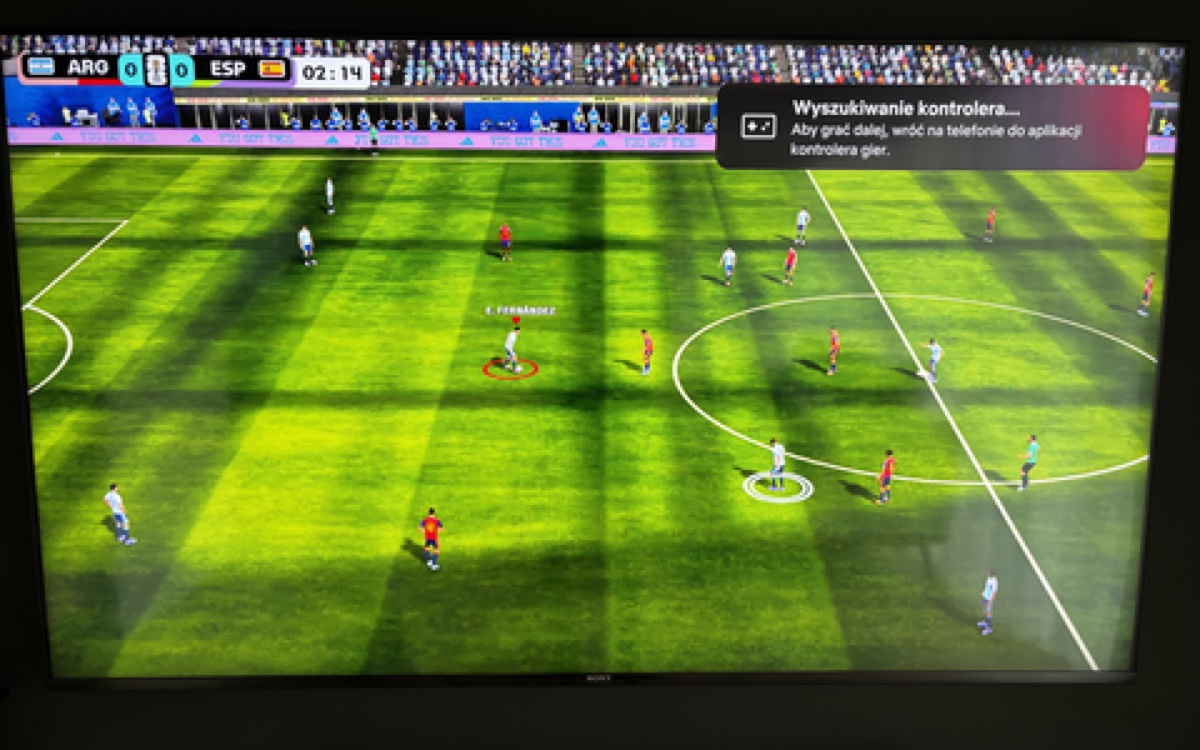
FIFA World Cup: Launch Edition was the first release that made me think there might be more to it.
The mechanism is remarkably simple. You launch the game on your television, scan a QR code with your phone, and the smartphone becomes the controller. No console. No gamepad. No installation on a PlayStation, Xbox, or PC. All you need is an active Netflix subscription, a television, and a phone.
Netflix puts it plainly: your phone is the controller and your TV is the stadium. Launch the game on TV, scan the QR code, and start playing without traditional gaming hardware.
That simplicity is the most interesting part of the entire story.
Netflix as the console nobody had to buy
Traditional gaming has long followed a clear model. If you want to play, you buy a device: a console, computer, handheld, or at least a controller. Then you buy or download a game, update it, sign in, learn the interface, and only then do you begin.
For gamers, this is normal. For many other people, it is a barrier.
Netflix is approaching a different segment. It does not need to persuade committed gamers to abandon their consoles. That would be difficult, expensive, and probably unsuccessful. It can do something else: persuade people who do not think of themselves as gamers to occasionally click “Play.”
That is a significant distinction.
When games are available in the same place where we choose a series, film, or stand-up special in the evening, they stop being a separate category that demands a purchase decision. They become another entertainment format—like an episode, a sports documentary, or a reality show.
A phone as a controller changes more than it seems
Using a phone as a controller is not a new idea. Party games, quizzes, and titles such as Jackbox have used it before. Netflix, however, has an important advantage: it does not need to explain what its platform is.
Netflix is already in the living room.
It is on the television, in the remote control, and embedded in people’s habits. For many families and groups of friends, it is the default screen for evening entertainment. Add a simple game without requiring another device, and the barrier to entry falls close to zero.
Netflix’s own instructions explain how each player can connect a phone or tablet as a controller. This is not an experience designed primarily for traditional gamers holding a gamepad. It is designed for the person who already has a phone within reach.
In other words, almost everyone.
This is not competition for Call of Duty
The easiest way to dismiss the strategy is to compare it with major AAA games.
Will Call of Duty be comfortable to play this way? Probably not. Can it replace The Witcher, Baldur’s Gate, Gran Turismo, or Cyberpunk? I doubt it. Is a phone sufficient for demanding, precise, multi-hour gaming sessions? In most cases, no.
But that is the wrong comparison.
Netflix does not need to beat PlayStation at games made for gamers. It may succeed at games for people sitting together on a couch who want something light for twenty minutes.
That could mean a football mini-game during the World Cup, a family quiz, karaoke, a dance game, charades, a simple arcade title, or a four-person party game—something between a board game, a television game show, and a mobile app.
In that segment, realistic graphics, ray tracing, and deep progression systems are not the deciding factors. Three things matter most: easy entry, a shared experience, and immediate fun.
That is where Netflix has an opportunity.
The real opportunity is party, family, and casual gaming
Gaming is often discussed through the lens of its largest titles, budgets, and launches. Yet a great deal of entertainment happens in less spectacular moments: at a house party, during the holidays, on a weekend with children, or on an evening when nobody wants to explain the rules of a board game but everyone is willing to click something simple on the screen.
That is a natural place for Netflix.
Not as an alternative to a console, but as an alternative to boredom between episodes. A household version of “let’s play something.” A digital party game that needs no box, instructions, or installation.
FIFA World Cup: Launch Edition is interesting not because it needs to be an outstanding game. It connects a global sporting event with a simple access model and is included in the Netflix membership at no extra charge.
It also reflects a wider trend: platforms no longer want merely to distribute content. They want to organize entire experiences around events, emotions, and social rituals.
The World Cup then becomes more than a match broadcast or a sports documentary. It can also become a game, a quiz, an interactive experience, and a reason to spend time together.
Netflix’s biggest advantage: distribution
The greatest challenge for new gaming platforms is usually not technology. It is distribution.
How do you persuade people to buy a device? Download an app? Build a game library? Win a place on the television home screen? Become part of a household ritual?
Netflix has already solved parts of this problem.
Its app is installed on millions of televisions. Users are signed in, paying for a subscription, familiar with the interface, and accustomed to opening the service. That does not mean they will automatically start playing. But it gives Netflix a starting position many gaming companies could only dream of.
This is why “Will Netflix threaten consoles?” is the wrong question.
A better one is: can Netflix create a category of games for people who would never buy a console?
I think it can.
The counterargument: quality can still stop the model
There is, of course, another side to this story.
Availability alone is not enough. If the games are weak, clumsy, laggy, or dull, users will click once out of curiosity and return to their series. Distribution gives Netflix an advantage, but it cannot replace product quality.
FourFourTwo’s review was sharply critical, pointing to limited modes, awkward controls, and technical problems.
That matters.
Netflix may have an excellent route to the audience, but if the experience feels like a technical curiosity rather than genuinely enjoyable entertainment, users will not form a new habit. And in consumer products, habit determines almost everything.
It is not enough for the game to launch. It has to be good enough for someone to say, “Let’s play that again.”
Conclusion: Netflix does not need to win gaming to change the living room
I do not expect Netflix to become a direct competitor to PlayStation, Xbox, or PC gaming anytime soon. These are different worlds with different needs and expectations.
But that is not the point.
Netflix may not win the gaming market. It may, however, capture part of home entertainment that has previously sat between categories: between a series and a board game, between a phone and a television, between watching and playing together.
That is much more interesting than another attempt to “kill consoles.”
The future of gaming may not be built exclusively around more powerful hardware and ever-larger worlds. A second segment may grow alongside it: simple, social, instantly available, hardware-light, and free from the need to declare yourself “a gamer.”
Netflix would not need to persuade us to buy a console.
It would only need to persuade us to click one more button after the film: “Play.”
Frequently asked questions
Do Netflix games on TV require a console?
No. Supported games require a compatible television or browser, a Netflix account, and a phone or tablet used as the controller.
Can Netflix Games replace PlayStation or Xbox?
Not for demanding AAA games. Its potential advantage lies in simple family, party, and casual games available without buying additional hardware.